Not All Moderates Are Equal

Clickstream Evidence from Argentina’s 2021 Election


Guadalupe González

May 6, 2024

What the literature said so far?

What the literature said so far?

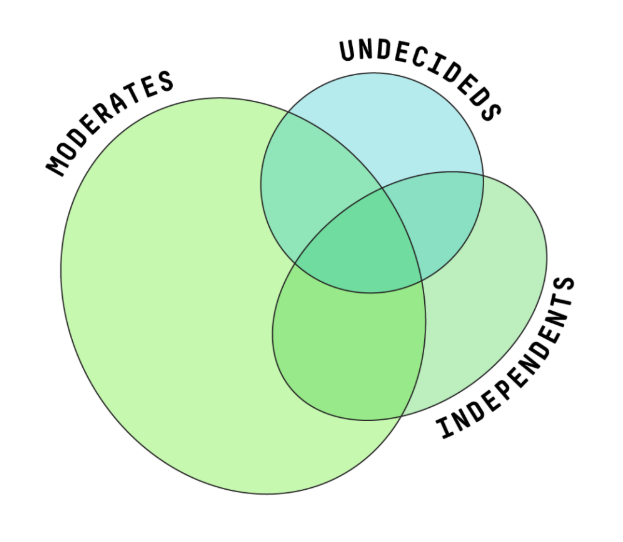
  • Campbell et al. (1960) establish that Moderates and independents tend to show lower political interest, less information, and more unstable attitudes

  • Klar and Krupnikov (2016) shows that not all moderates are equal and we can distinguish between moderates that are interested in politics and moderates that are not.

What the literature said so far?

  • Campbell et al. (1960) establish that Moderates and independents tend to show lower political interest, less information, and more unstable attitudes

  • Klar and Krupnikov (2016) shows that not all moderates are equal and we can distinguish between moderates that are interested in politics and moderates that are not.

Research question

Research question

To what extent do politically interested moderates consume more diverse political information than uninterested moderates, as measured by entropy in clickstream data during Argentina’s 2021 election?

Clickstream Data (Browsing History)

Clickstream Data (Browsing History)
Clickstream Data (Browsing History)
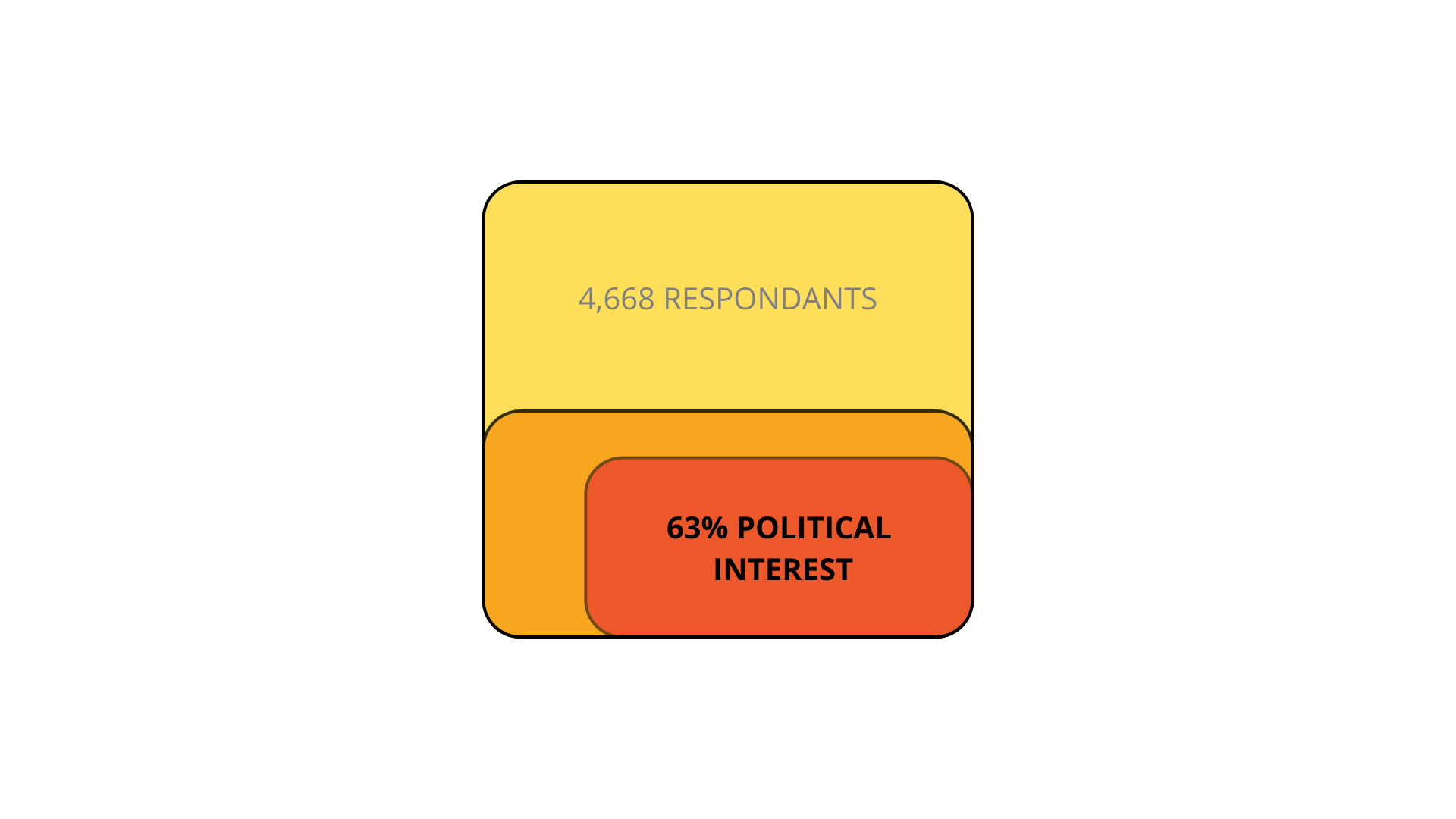
How was the process?:

So I:

  1. Filter the ones that are news portal

  2. Scrape each url to get the title, description and the body of the news

  3. Calculate information gain from all of them and,

  4. Merge with my moderates data.

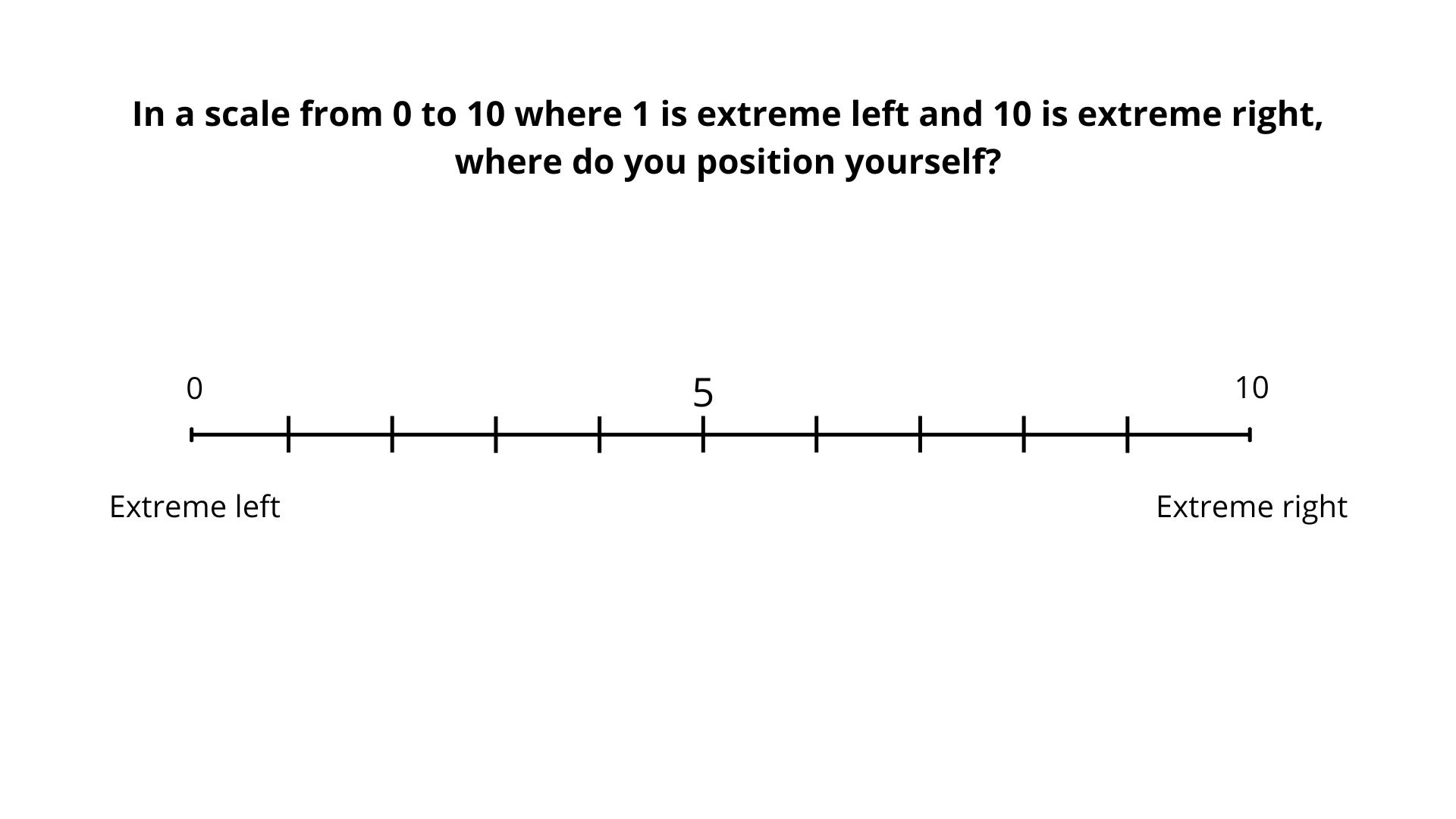
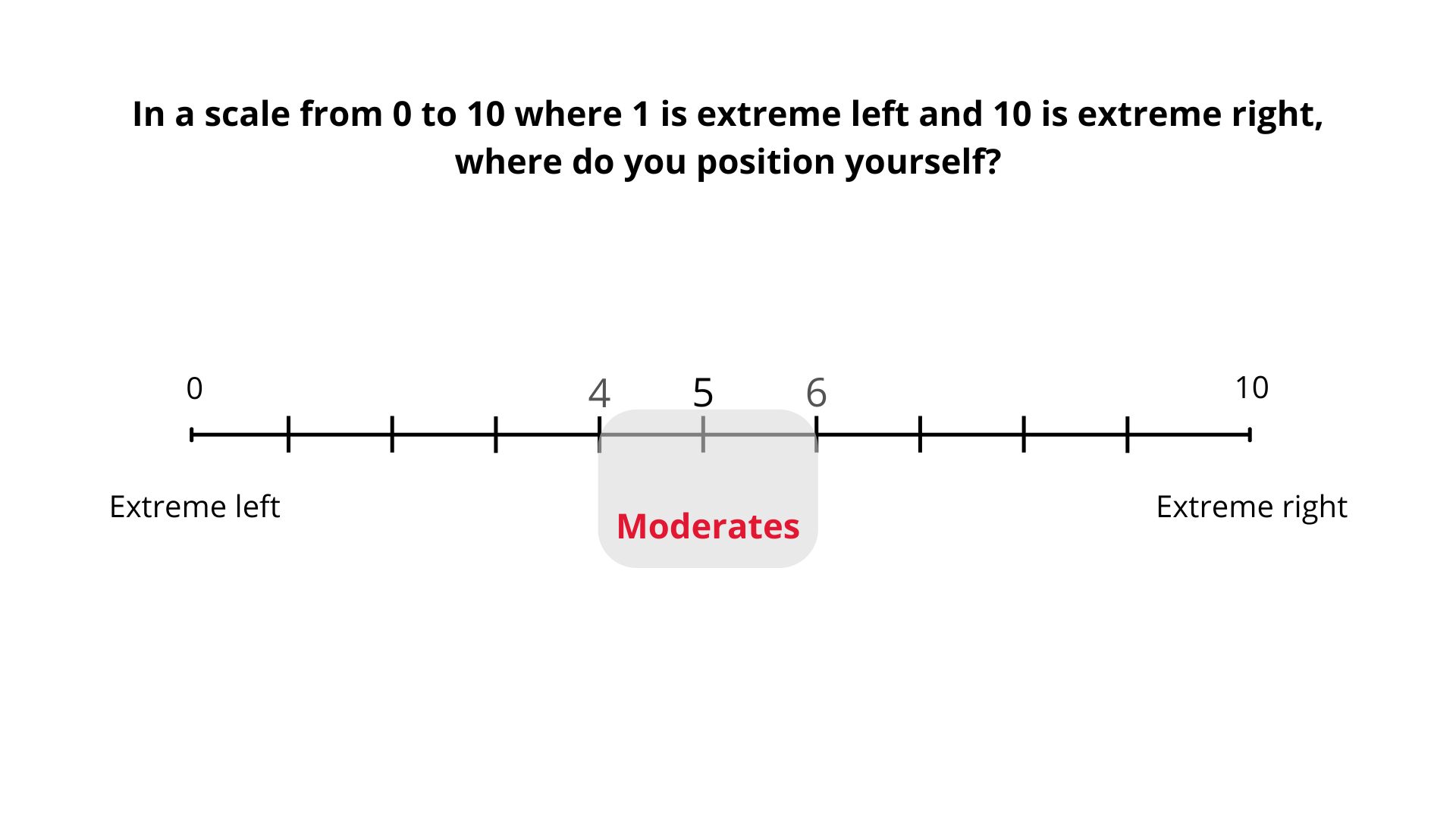
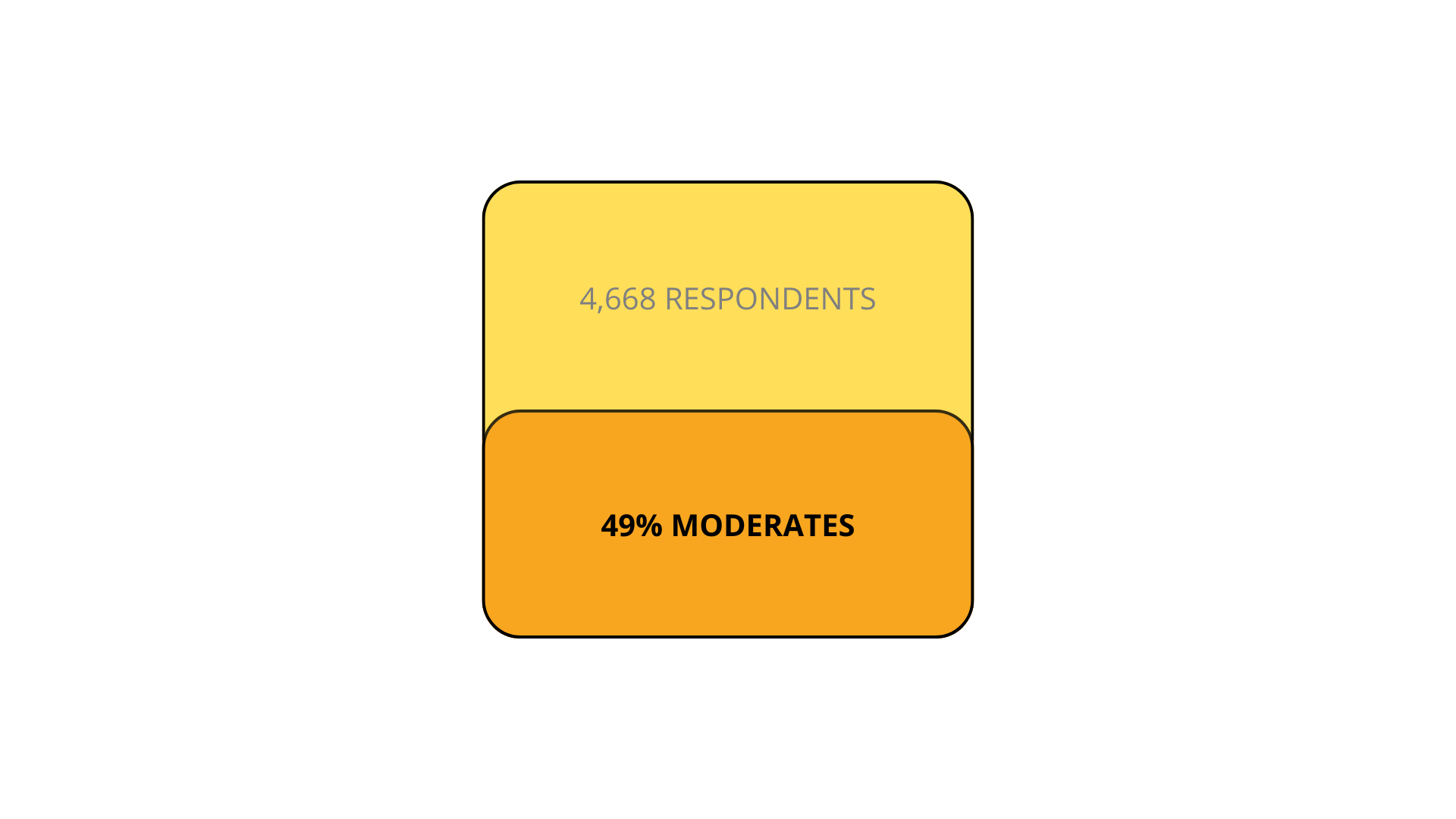
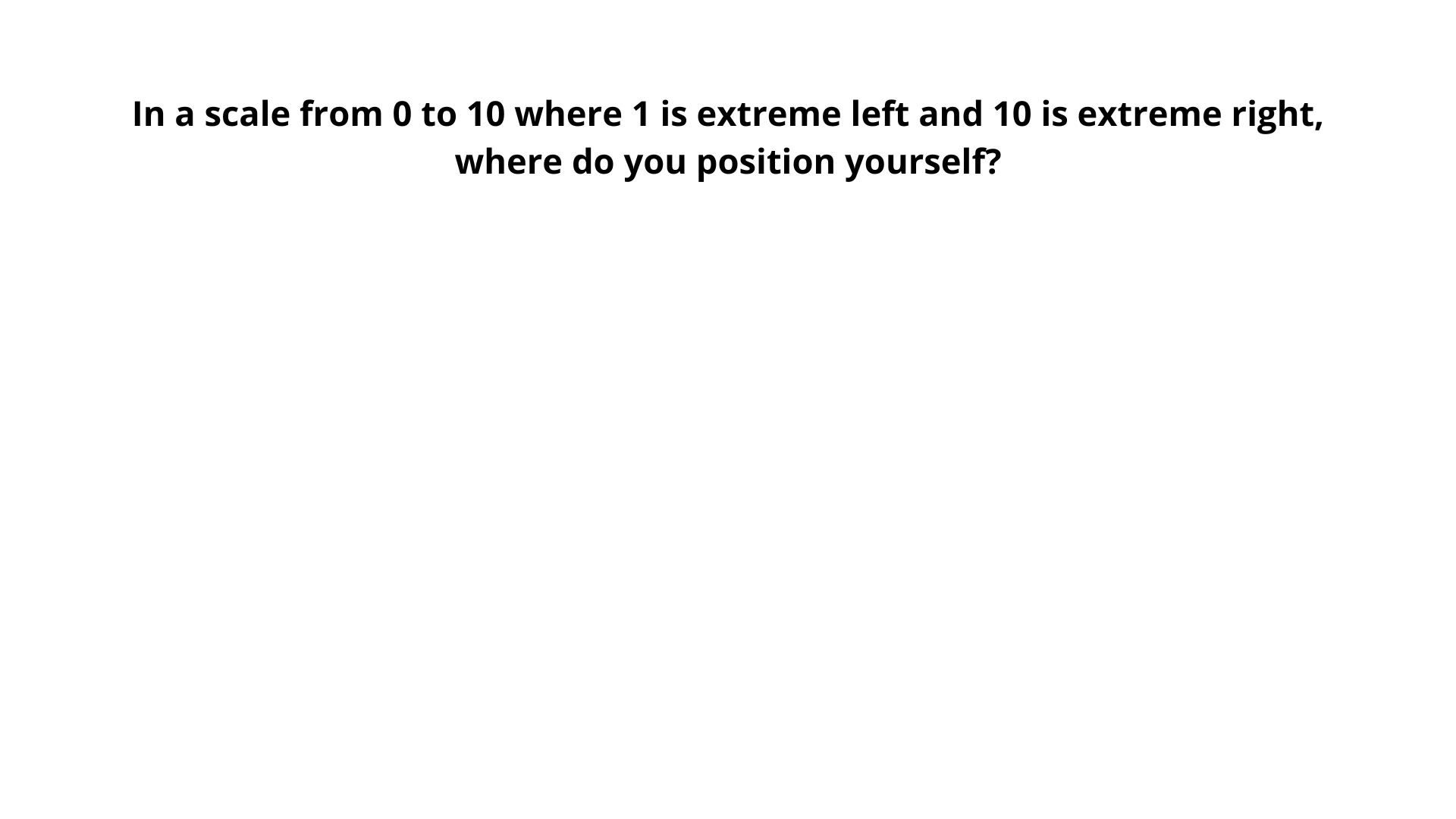
But how we identify a ‘moderate’ voter?

How can we measure how much informative it is a text?

What is entropy?

What is entropy?

Entropy is a way to measure how predictable or uncertain something is. In the context of news consumption, it tells us how diverse or concentrated the information exposure is.

How can we measure entropy?


\[ Entropy = - \sum_{i=1}^{n} p_i log_2(p_i) \] Where:

  • \(p_i\) is the proportion of attention or consumption to source/topic \(i\).
Code
def shannon_entropy(text):
    # Tokenize the text
    words = text.split()
    word_counts = Counter(words)
    total_words = len(words)
    
    entropy = 0.0
    for count in word_counts.values():
        p = count / total_words
        entropy -= p * math.log2(p)
    return entropy

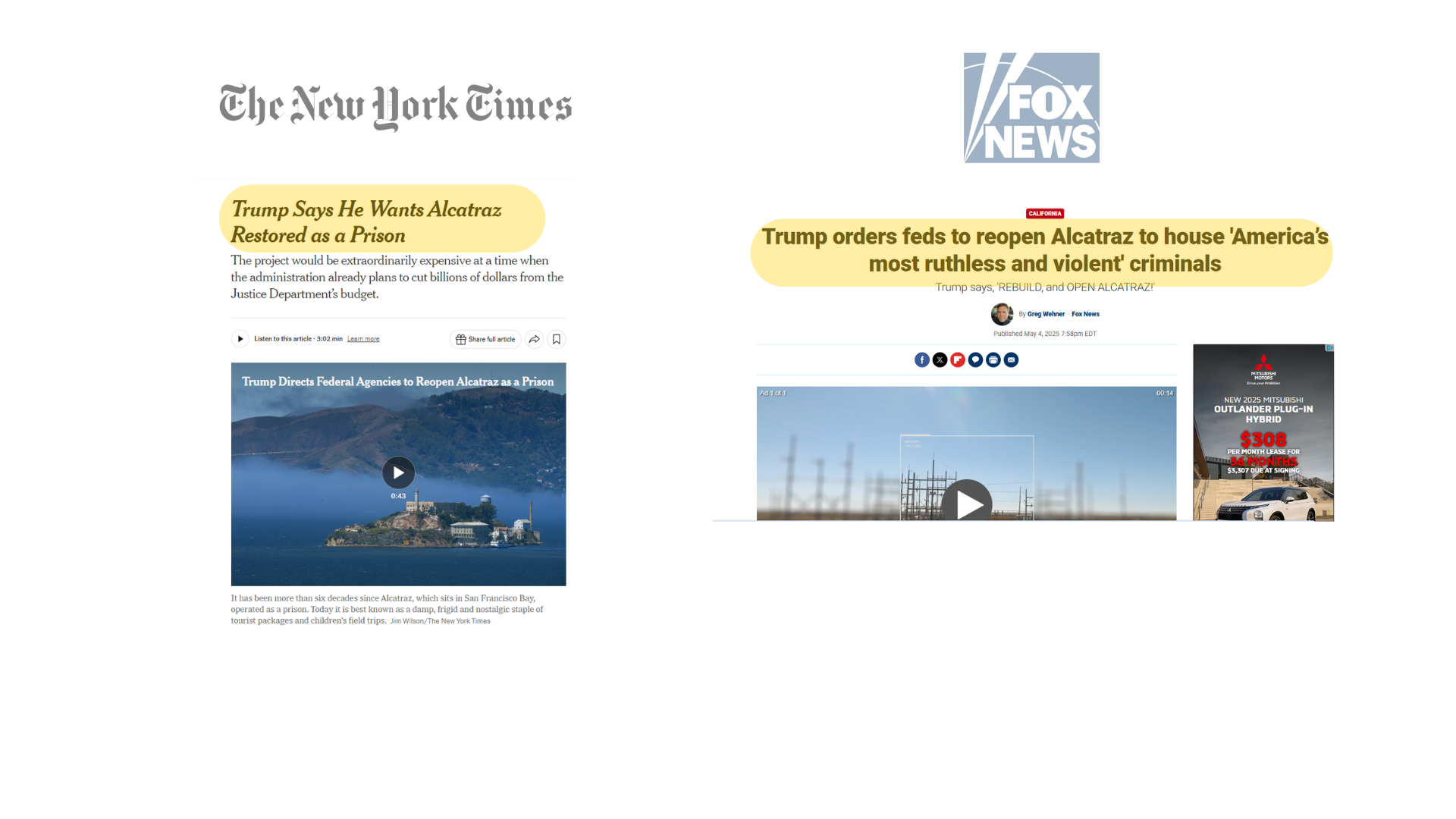
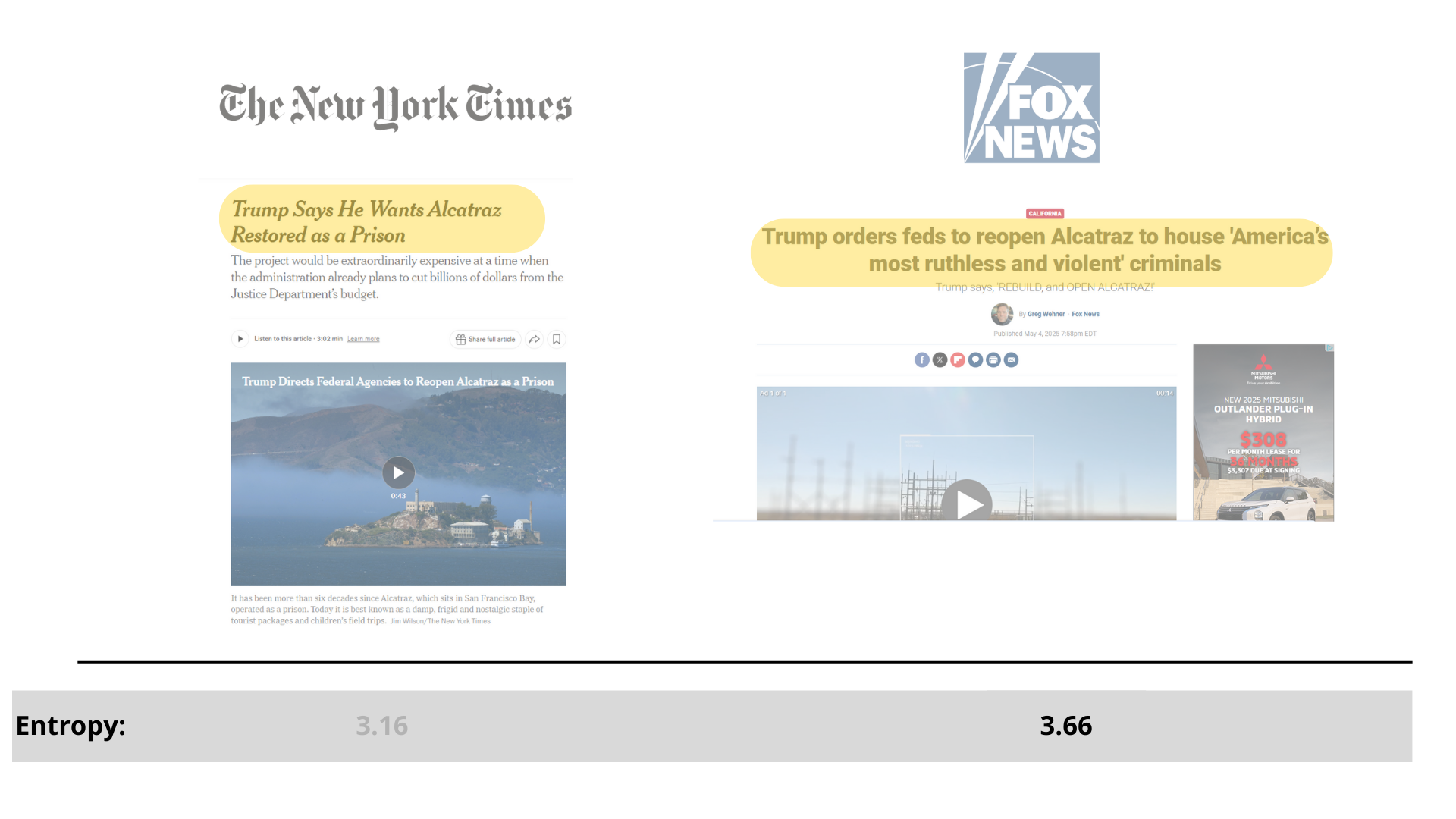
For Example…

For Example…

So, we can expect that…
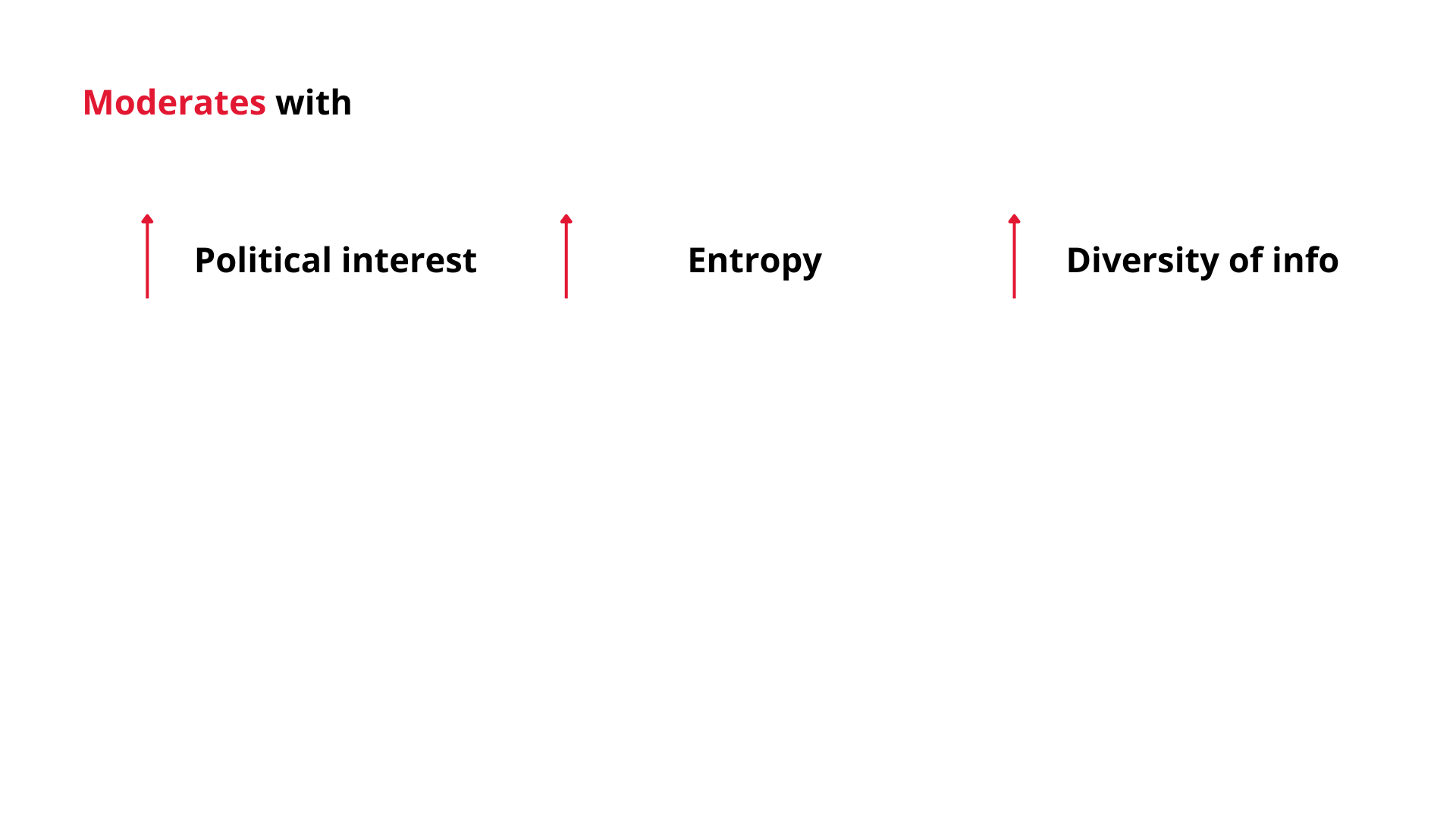
So, we can expect that…
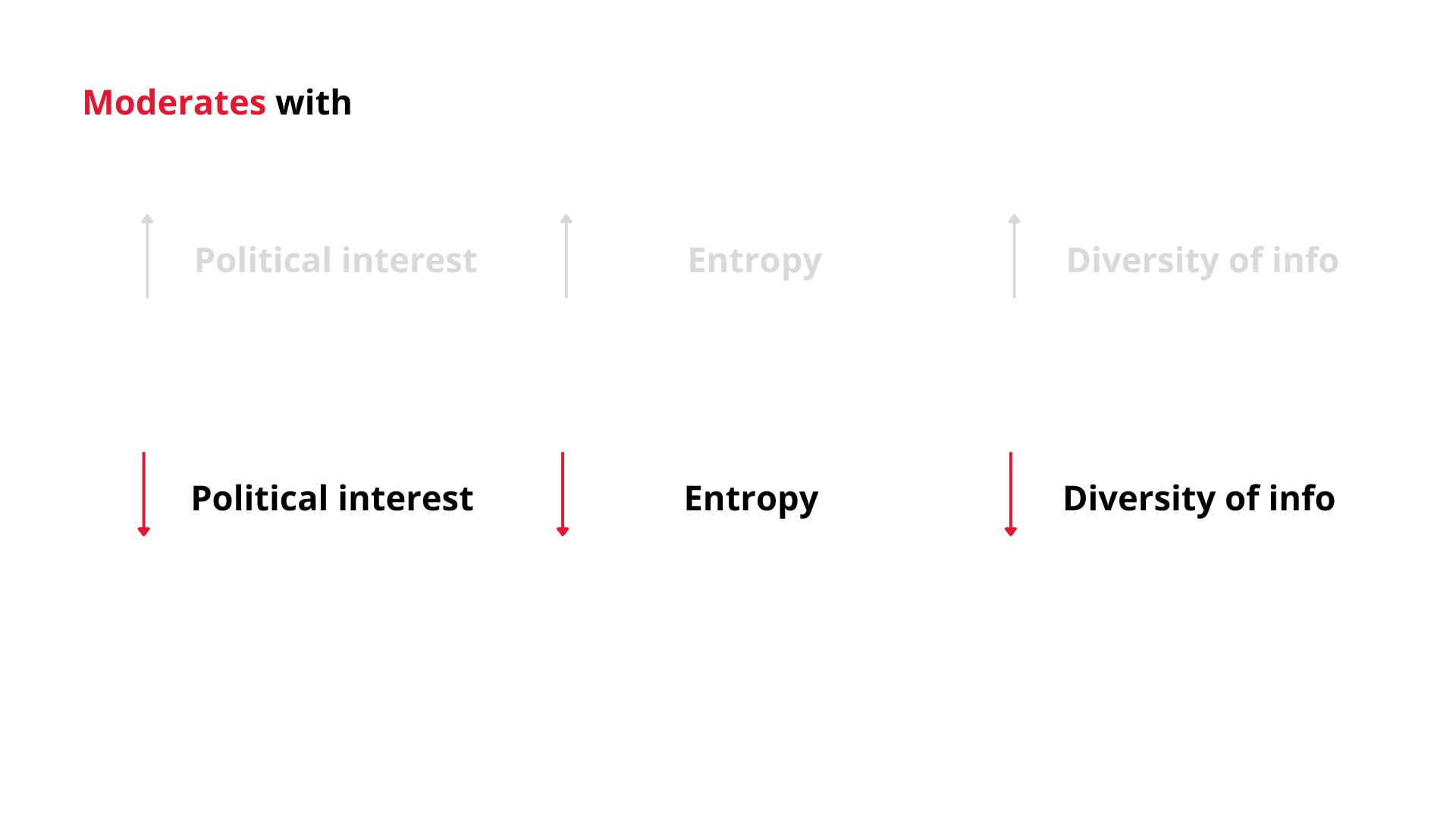
So, we can expect that…

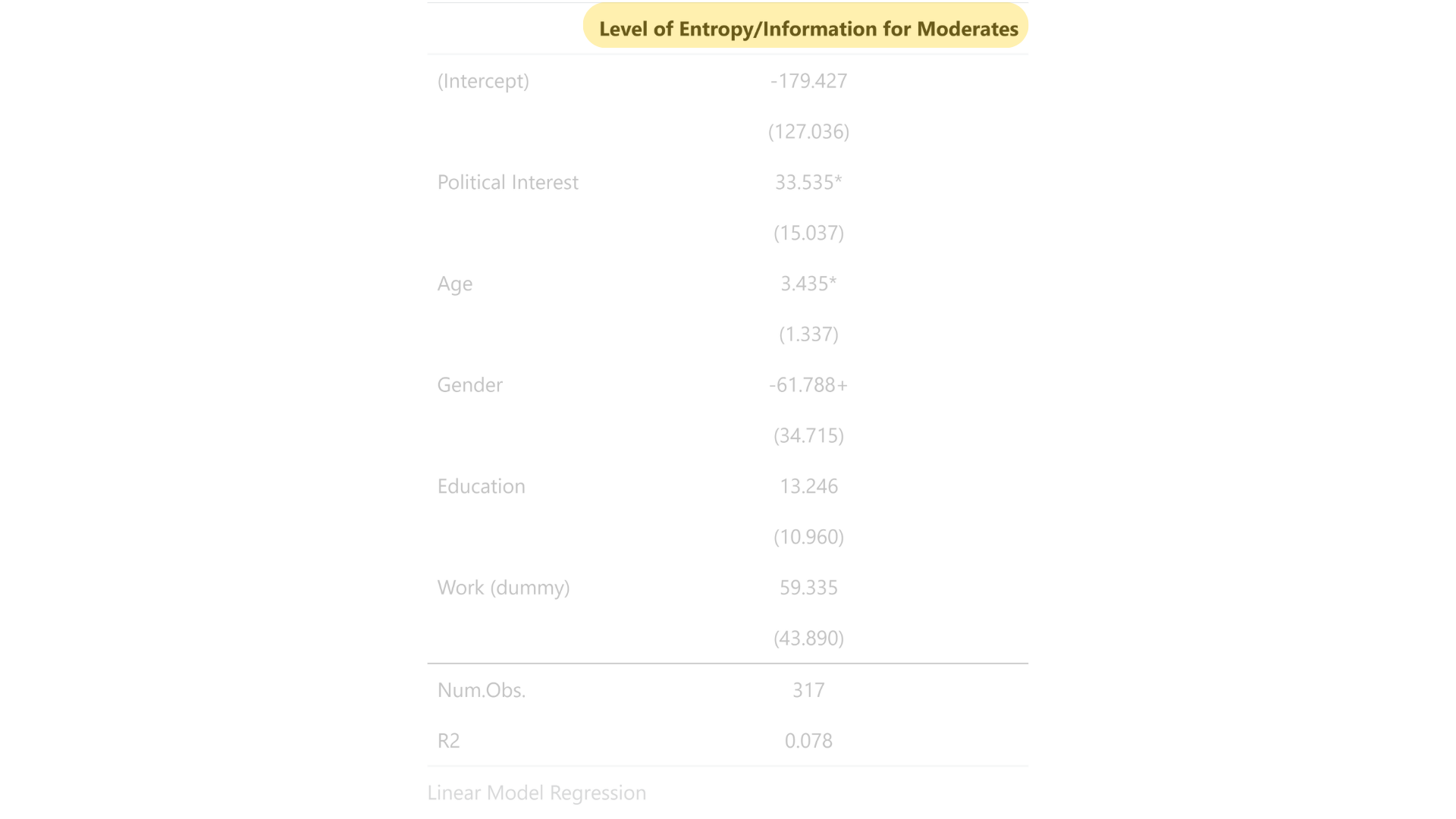
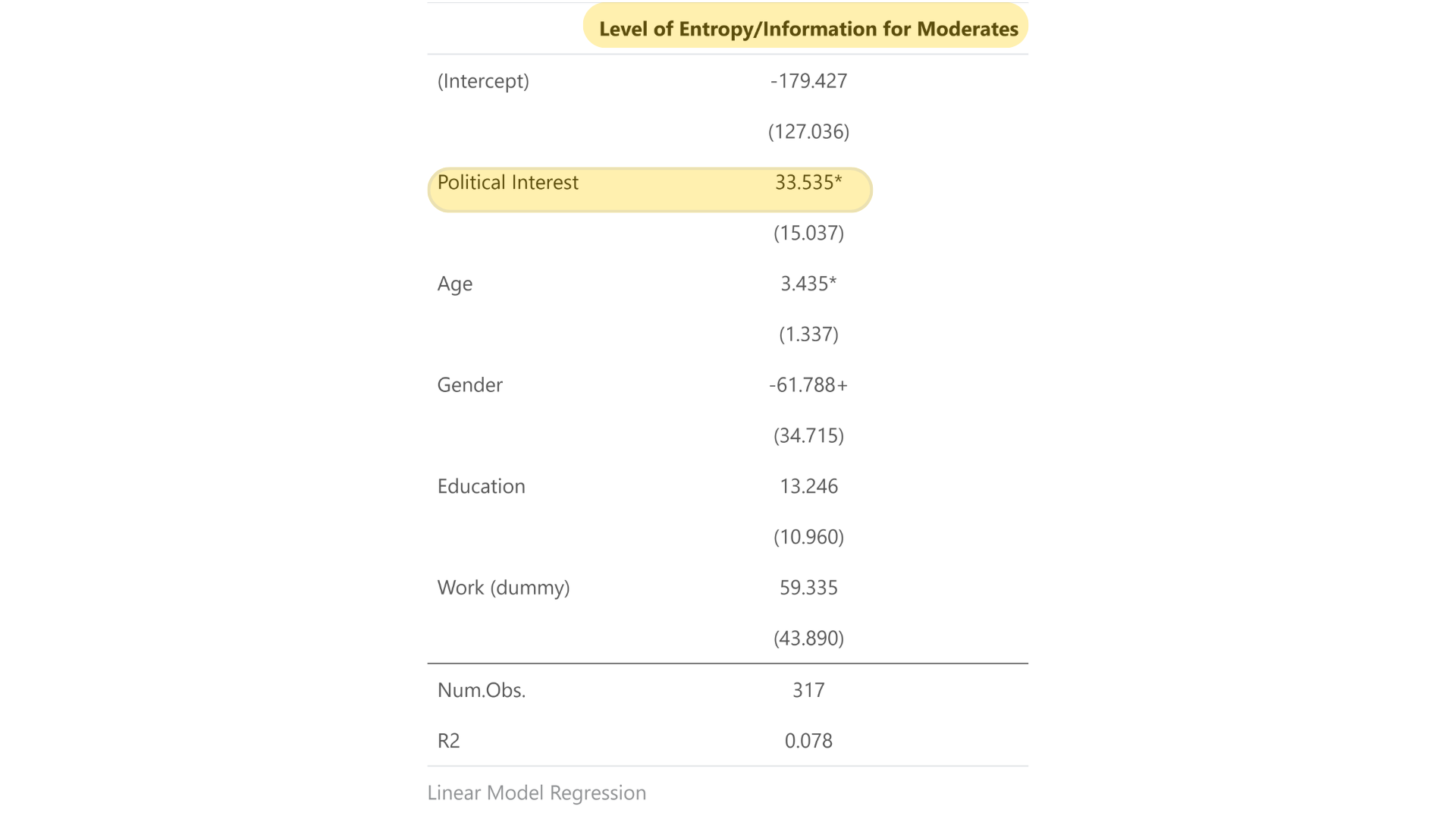
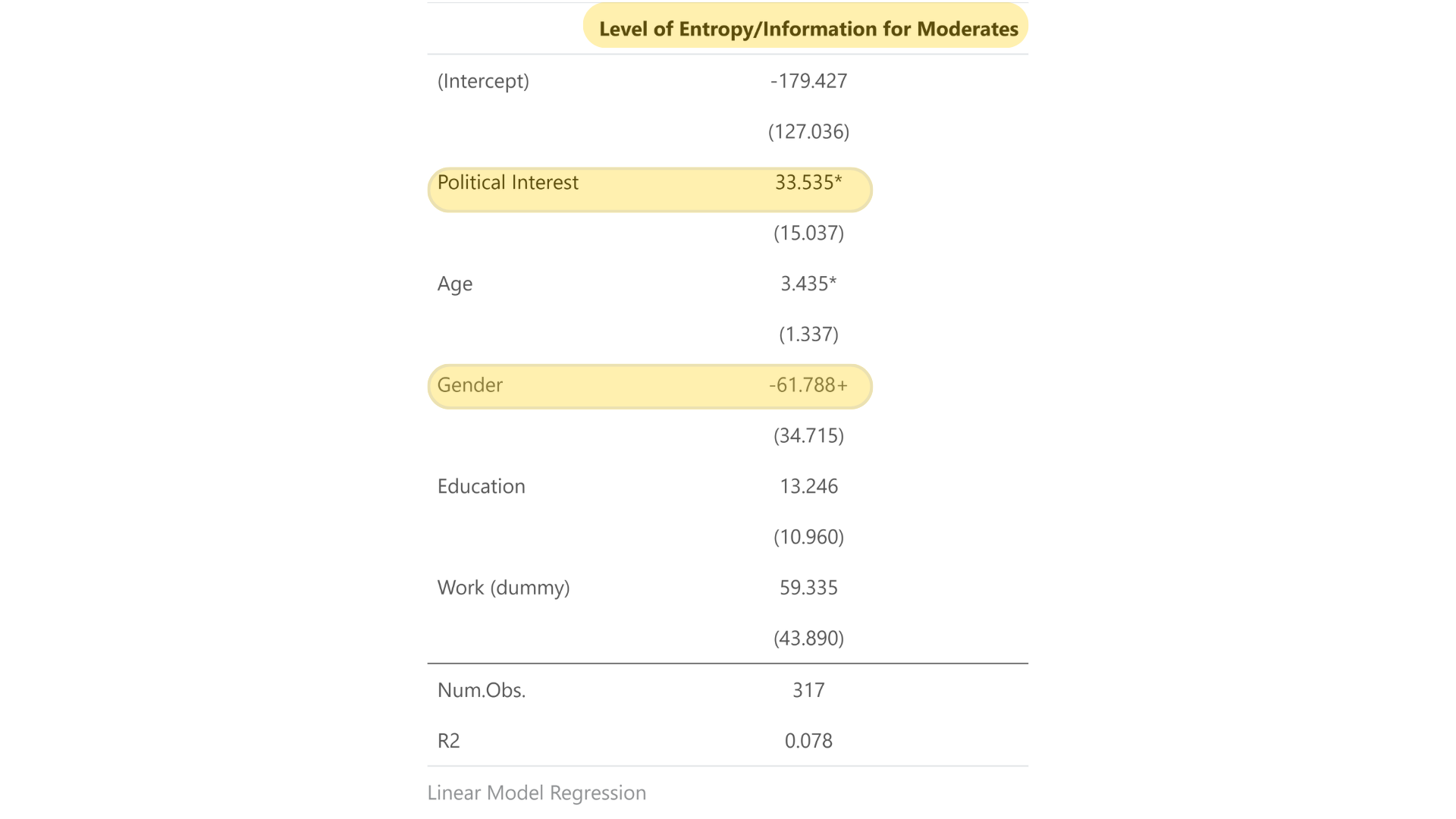
Linear Regression


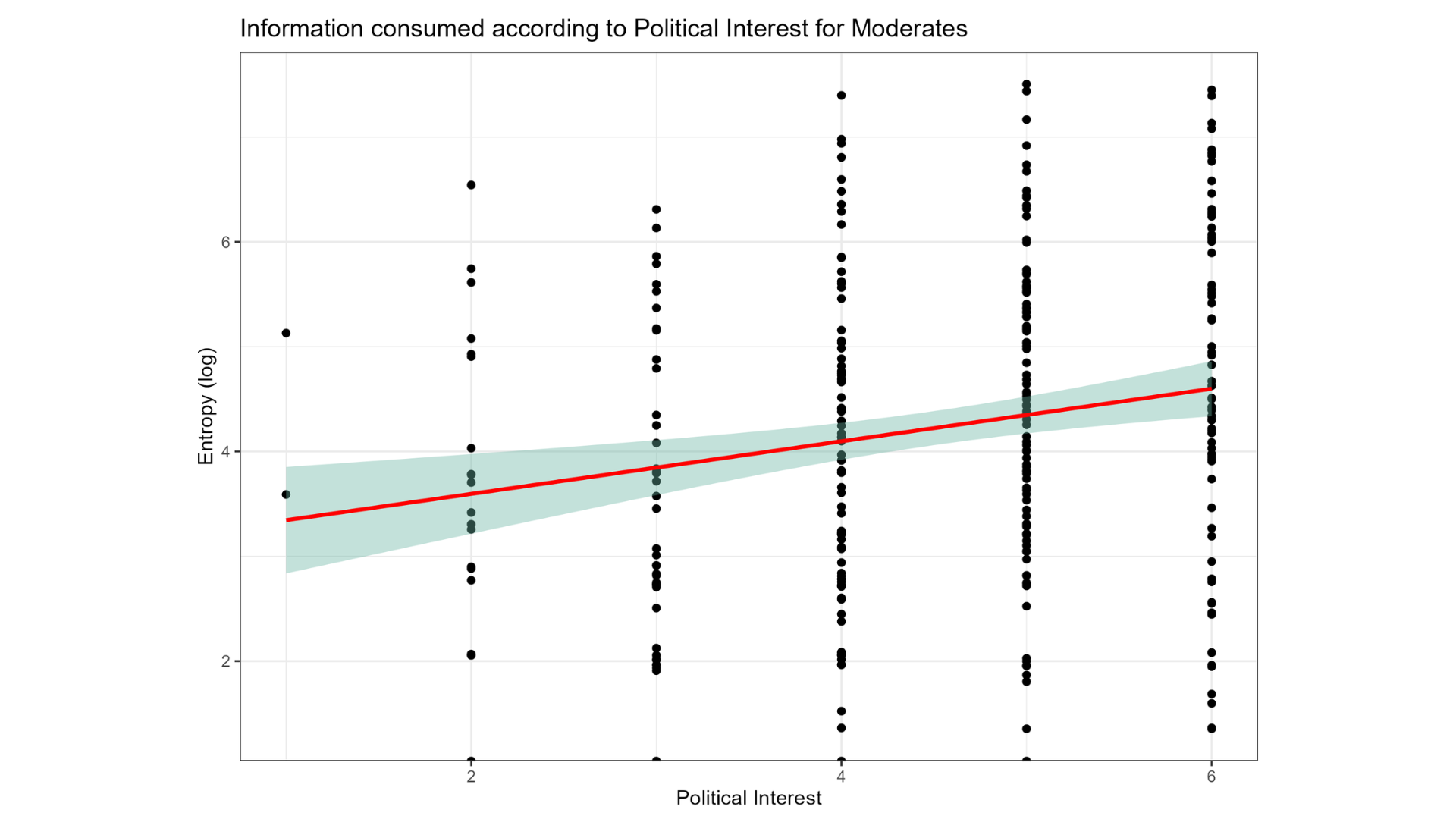
\[ \log(\text{entropy}_i) = \beta_0 + \beta_1 \cdot \text{political interest}_i + \beta_2 \cdot \text{Age}_i + \\ \beta_3 \cdot \text{Gender}_i + \beta_4 \cdot \text{Education}_i + \beta_5 \cdot \text{Work}_i + \varepsilon_i \]

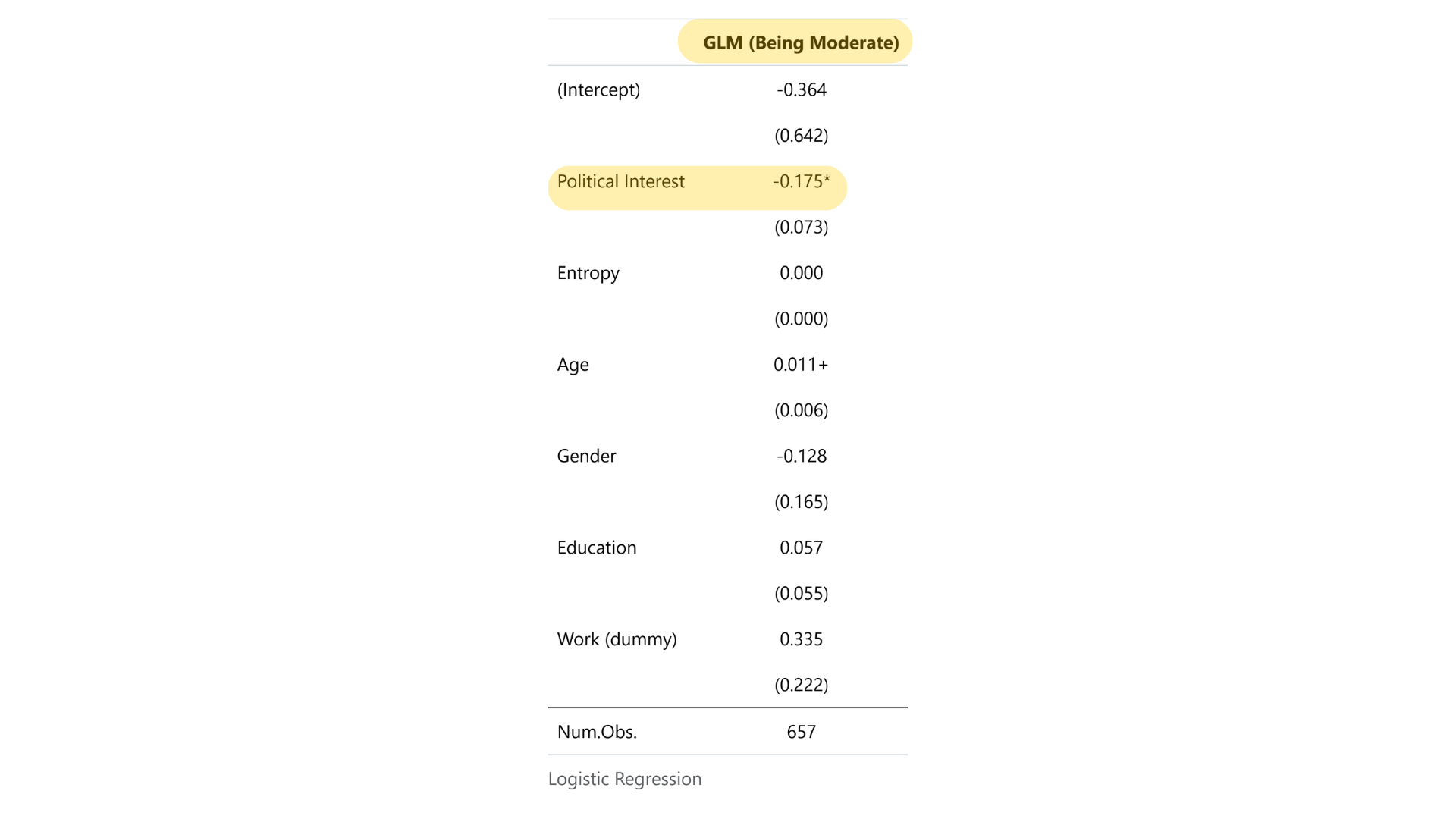
Some (parcial) results…

Some (parcial) results…

Regression in a plot
Regression in a plot
Conclusions

  1. Use clickstream data to measure political interest and information it is a possibility.

  2. There are moderates that are interest in politics.

  3. There is a difference in the consumption of news by moderates with political interest and without.

  4. Moderates with high political interest tend to review news with more information / diversity of information on

Limitations & next steps

  1. ‘Moderates’ as category that reflects ideological autoperception it is not the best approach.

  2. ‘Entropy’ as indicator has some flaws: what about repeat information or quality of information?

  3. Correlation it is not causation.. is it possible to make causal claim that political interest decrease the effect on looking for information?

Appendix

References

Campbell, Angus, Philip E. Converse, Warren E. Miller, and Donald E. Stokes. 1960. The American Voter. New York: University of Michigan, Survey Research Center; Wiley.
Klar, Samara, and Yanna Krupnikov. 2016. Independent Politics: How American Disdain for Parties Leads to Political Inaction. First. New York: Cambridge University Press.

Thank You for Your Attention! Questions?


r fontawesome::fa("envelope") guadag12@umd.edu

r fontawesome::fa("link") https://guadagonzalez.com/

r fontawesome::fa("github") @guadag12